
Earth Studio: Double Displacement at the Water's Edge
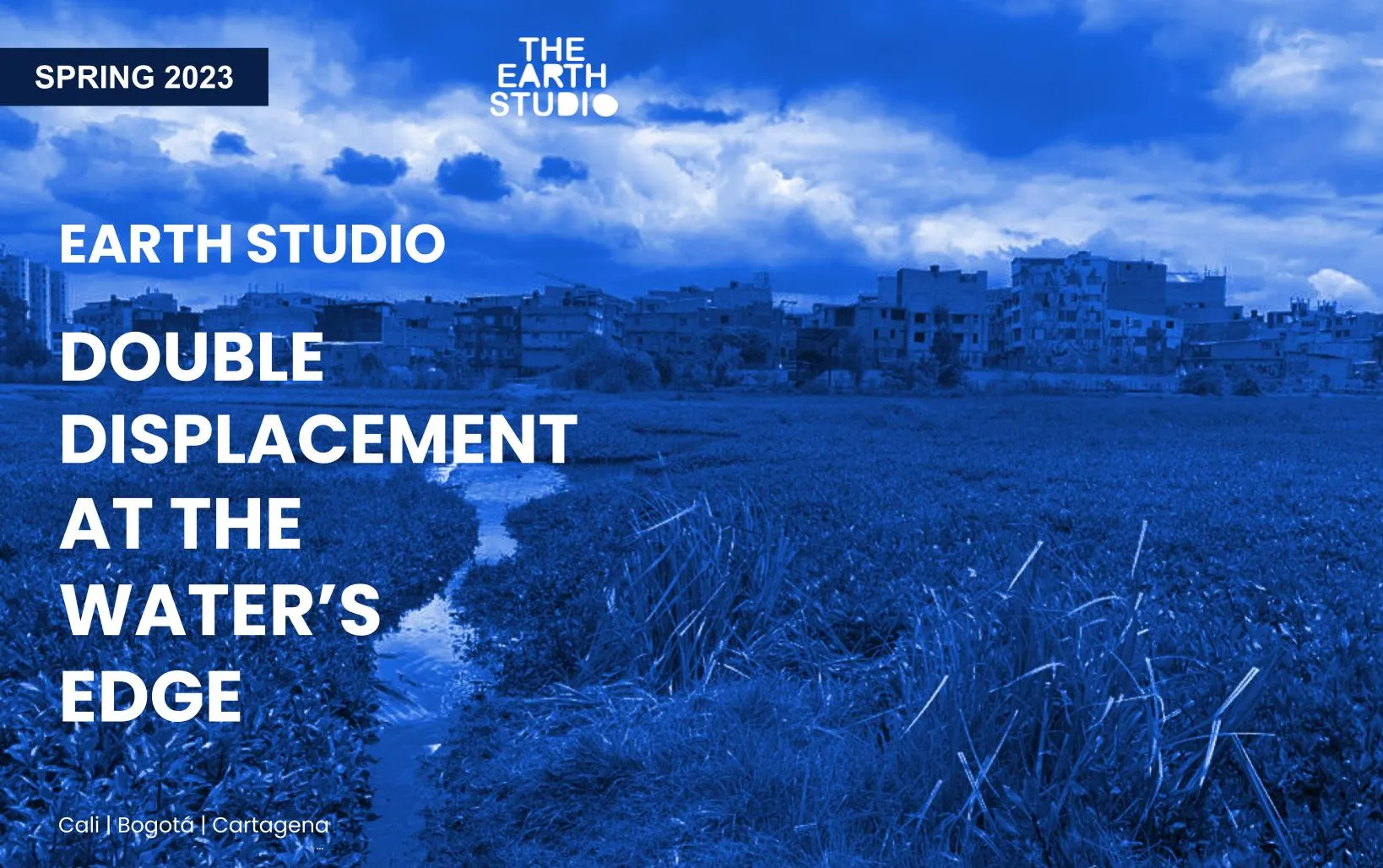
Colombia is poised to be a major voice on the global stage and can help redefine the priorities and approaches to the global climate crisis and notions of adaptation as well as loss and damage. Among the most biodiverse countries on the planet, it is also among the countries with the largest numbers of internally displaced people. What does this mean for climate justice? What processes, policies, and design strategies are needed to deliver a just transition? What lies at the intersections of historic dispossession of homes and land, further compounded by climate impacts and subsequent adaptation actions?
“Imagining Climate Resilience and Justice" is an elective course offered in the Columbia Climate School Masters of Climate and Society Program. Taught in a collaborative format with GSAPP’s Water Urbanism Design (UD) Studio, this course explores climate justice and action through a lens of urban planning, design, and policy in support of communities and ecologies on the frontlines. In Spring 2023, the course examined water, social life, nature-based infrastructure, housing, climate justice, and climate migration with a focus on the broader geography from mountain to coasts and seas of Colombia. During this time, 52 Urban Design and 10 Masters of Climate and Society students and faculty worked together on design and policy visions that address key climate themes emergent in Cali, Bogota, and Cartagena. In March, the cohort traveled to Colombia, exchanging with students and faculty at Uni los Andes and Uni del Valle in Colombia, meeting with municipal and civic leadership, participating in global forums including the “Water as Leverage”, and learning from frontline communities. Students developed research and synthesized possible design and process-based actions related to the phenomenon of “double displacement.”
We explored relocation processes, green-blue infrastructure, eco-tourism, regenerative livelihoods, new housing and urban typologies, coastal design and zoning and regenerative agriculture. In the Colombian context, land tenure, land-use standards, housing typologies, management and resilience concepts are also creating grounds for alternative forms of water driven development patterns. Through collaboration across schools, with local communities, NGO’s, and policy-makers, this course explored the successes and failings of case examples as well as workshopped policies and practices, deepening what we learned from and alongside local actors.
Finally, we explored the role of Columbia University and applied pedagogy. By inquiring into our own role(s) and complex personal, social, and institutional relationships with climate justice, we considered new futures of multidisciplinary, international, and multiscaler learning, partnership, and advocacy. We hope that this supports the Columbia Climate School and others as we collectively and urgently reconsider the role of the classroom in the climate crisis
LINKS TO PUBLICATION
Full Publication (for web viewing)
Introduction
Background, Teaching Team, Context | Colombia x Climate x Water Justice | Classroom as a Vehicle for Climate ActionDesign Vision Snapshots
Bogota, Cali, CartagenaEnabling Policies | Seeds of Change and Case Studies
Towards a Blue Economy
Towards Housing Justice
Towards a Joyful and Just Transition
Towards Care and Stewardship
Towards Community GovernanceReflections and Recommendations
Feedback, Climate Action at Columbia, Student Reflections
PARTNERS
IMPLEMENTATION PARTNERS
Fundación Grupo Social
Maristella Madero
EcoVida
Water as Leverage, Netherlands Enterprise Agency
Robert Proos
Alcadia Mayor de Cartagena de Indias
Luis Villadiego
ACADEMIC PARTNERS
Universidad de los Andes
Mizoocky Mota
Universidad del Valle
Universidad Pontifica Bolivariana